Horse · Kaufman County / DFW
What's the Difference Between a Livestock Trailer and a Horse Trailer?
Understand the key structural and safety differences between livestock trailers and horse trailers, and see how our Kemp rental fleet supports East DFW ranch operations.
Published August 18, 2026
What's the Difference Between a Livestock Trailer and a Horse Trailer?
Ranchers and horse owners across Kaufman County and the wider East DFW area know that moving animals safely requires the right equipment. If you are searching for a livestock trailer rental around Kemp, Terrell, or Mabank, you might wonder if any general stock trailer can haul a horse, or if a specialized horse trailer is necessary. While they look similar from the highway, these trailers are engineered for very different animals. Using the wrong style can cause unnecessary stress, animal injury, or structural trailer damage.
At Kaufman Trailer Rentals in Kemp, Texas, we keep local ranches and agricultural properties running with our fleet of utility, dump, cargo, and car hauling trailers. While we do not rent live-animal trailers ourselves, we help local horse owners and livestock producers in Van Zandt, Henderson, and Navarro counties understand their trailering options. Choosing the correct trailer is essential for keeping your stock safe on long drives down Highway 175 or Interstate 20.
The Mechanics of a Livestock Trailer Rental for Cattle
A traditional livestock trailer—often simply called a stock trailer—is built for herd animals like cattle, sheep, and goats. These trailers are designed with open slats along the sides to maximize natural airflow and keep animals cool during hot Texas summers. They usually feature a wide-open interior space with one or two swinging center gates. This open layout allows cattle to stand together naturally and balance against one another during transit.
Stock trailers do not have padded stalls, dividers, or complex interior hardware. They are built for quick loading, high capacity, and easy washouts after a long day at the local auction barn. The floor is typically bare metal or heavy wood planks. It is a rugged, utilitarian design built to handle the mud and weight of multiple head of cattle that may not be halter-broken.
Why Horses Require Specialized Horse Trailers
Horses have a different psychological and physical makeup than herd cattle. They are prey animals that can panic quickly in tight, loud, or dark spaces. A dedicated horse trailer is designed specifically to keep a horse calm, physically secure, and stable during transport.
Unlike a stock trailer, a horse trailer features padded partitions to keep individual horses separated. This prevents them from biting, kicking, or stepping on each other. The interior walls and ceiling are usually insulated to reduce road noise and temperature extremes. The windows are adjustable, allowing you to control the breeze without exposing the horse's eyes to flying road debris along Highway 34 or Highway 175.
Furthermore, horse trailers focus heavily on controlled footing. They feature thick, textured rubber mats over the floor to absorb road vibration and prevent slipping. Many models also include built-in tack rooms, saddle racks, and feed managers to support horse owners traveling to weekend shows across Ellis or Rockwall County.
Can You Haul a Horse in a Stock Trailer?
It is common in rural Texas to see horses hauled in open stock trailers, but it requires careful preparation. If you must use a stock trailer for a horse, you must ensure there are no sharp metal edges, exposed latches, or low ceilings that could injure a rearing animal. The open slats can also let in cold wind and rain, which can chill a wet horse during winter hauls in North Texas.
Conversely, you should never haul herd cattle in a specialized horse trailer. The dividers and padded walls in a horse trailer will easily be damaged by untamed cattle. Cattle also produce more wet waste, which can quickly rot the wood or corrode the aluminum floors of a horse trailer if not washed out immediately.
Supporting Kaufman County Ranches with Our Kemp Rental Fleet
While you secure a live-animal transport solution, your horse property or ranch still has heavy daily work to do. Kaufman Trailer Rentals provides the tough, reliable equipment you need to keep your acreage in shape. We serve property owners throughout Kemp, Gun Barrel City, Forney, and Waxahachie with a hard-working fleet:
Whether you are hauling pasture gate panels, cleaning out a run-in shed, or moving a tractor for pasture shredding, we have the specific trailer for the job. Our rental rates are straightforward, with no hidden fees.
- 14k Hydraulic Dump Trailers: Excellent for cleaning out old manure piles, clearing brush, or hauling gravel for muddy paddock gates. Rate is $150 per 24 hours.
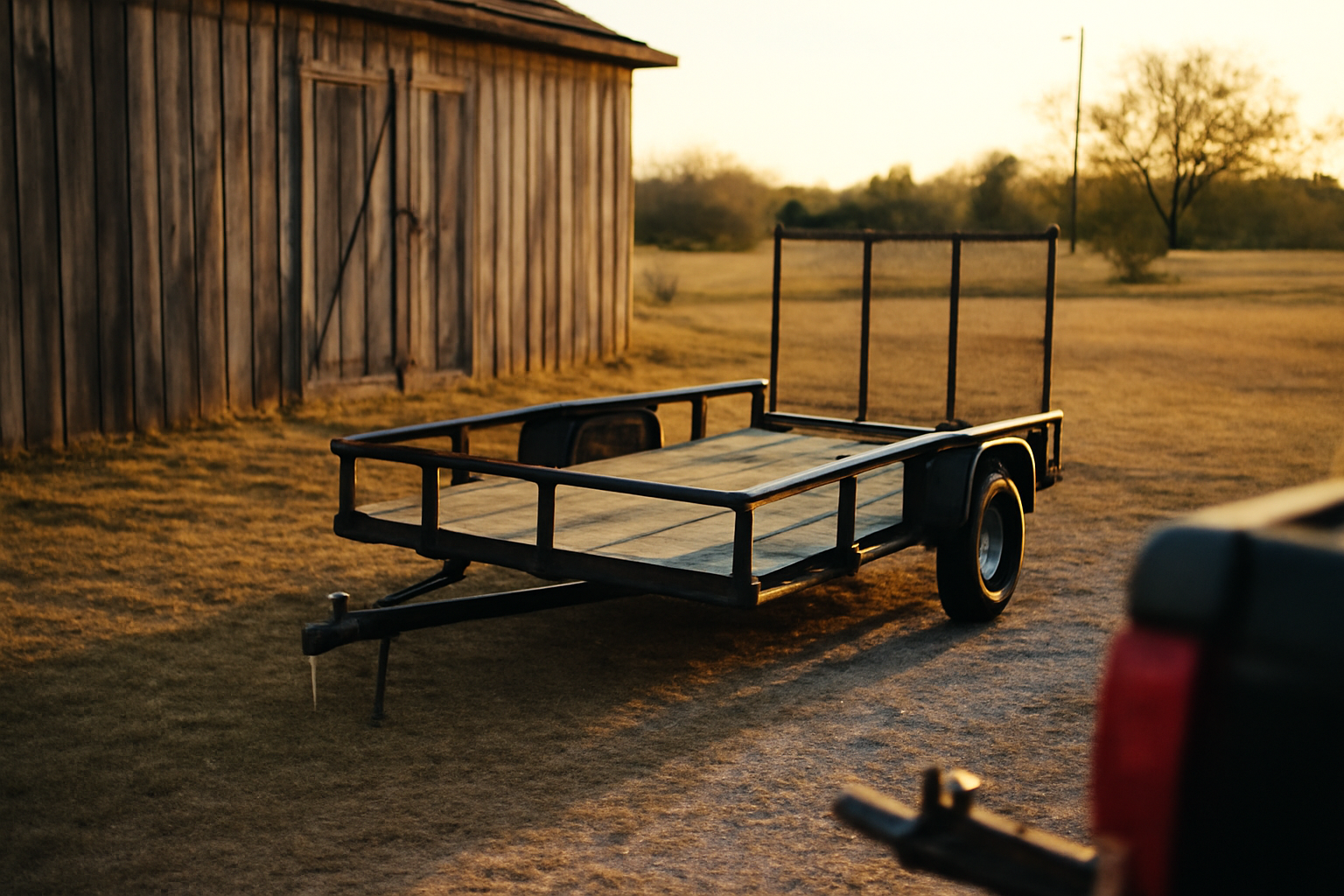
- 20' Open Utility Trailers: Ideal for hauling round hay bales, corral panels, T-posts, or compact tractors.
- Enclosed Cargo Trailers: Perfect for hauling expensive saddles, show tack, feed bags, and power tools safely out of the weather.
- 14k Car Haulers: Heavy-duty decks for moving farm trucks, tractors, or skid steers.
- Junk Removal & Cleanout Services: We offer a 3-day dumpster rental for $350, or a $250 live load service to clean out old barns and scrap metal.
Contactless 24/7 Smart-Lock Pickups in Kemp
Ranch chores and farm emergencies do not stick to standard business hours. That is why Kaufman Trailer Rentals uses a fully contactless, self-service pickup system powered by Lockii smart-locks. You can book your utility, cargo, or dump trailer online, receive your digital secure code, and hook up your trailer at our Kemp base any time of day or night.
We are a locally owned business, not a national corporate chain. We care about our neighbors in Kaufman, Seagoville, Crandall, Ennis, and surrounding areas. For questions about booking our utility or dump trailers, you can call us at (469) 689-1299 or email KaufmanTrailerRentals@gmail.com. Check our real-time availability today to secure your trailer for your next farm project.