Competitor Comparisons · Kaufman
Should I Rent a Car Hauler Trailer or a Tow Dolly?
Car hauler or tow dolly? Compare safety, tow vehicle requirements, and real costs for hauling a vehicle around Kaufman County, TX.
Published October 21, 2026
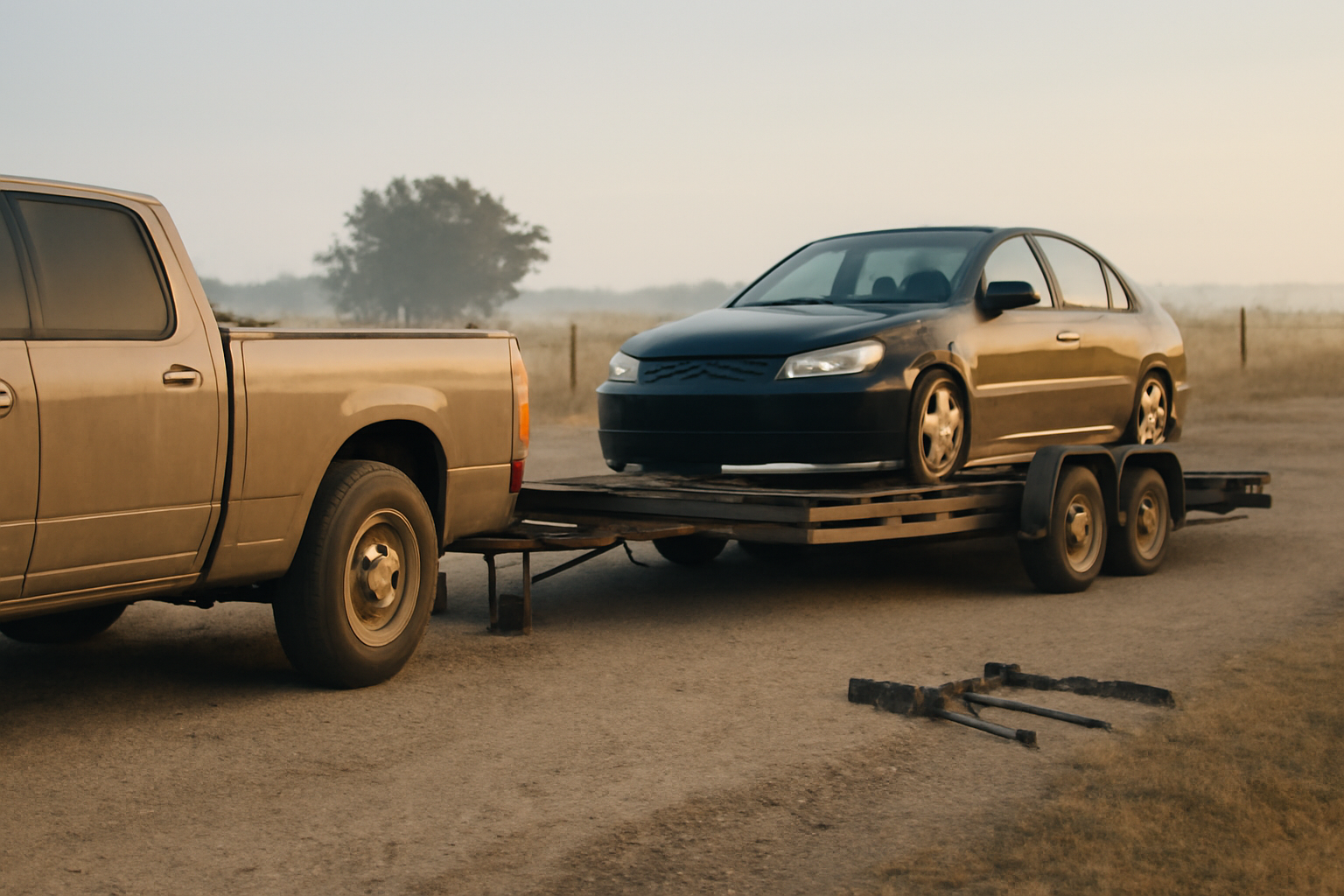
Should I Rent a Car Hauler Trailer or a Tow Dolly?
If you need to move a vehicle that isn't being driven, you've got two real options: a car hauler trailer or a tow dolly. Both get the job done, but they work very differently, and picking the wrong one can cost you in tire wear, driveline damage, or a white-knuckle drive on the highway.
The short version: a car hauler trailer lifts all four wheels off the ground and tows flat. A tow dolly only lifts the front wheels, dragging the rear tires the whole way. That difference matters more than people expect once you're loaded up and moving at highway speed.
We rent both styles of equipment out of Kemp, and the car hauler vs tow dolly question comes up almost every week from folks moving cars between Terrell, Forney, Kaufman, and out toward Mabank or Gun Barrel City.
How a Car Hauler Trailer Works
A car hauler trailer is a flatbed with ramps. You drive or winch the vehicle on, strap it down, and all four wheels sit on the deck. Nothing touches the road but the trailer's own tires.
Our 20ft car hauler is rated at 14,000 lbs and comes with a 12,000 lb winch built in. That winch is the key feature if you're moving a car that doesn't run, has a dead battery, or won't roll freely. You don't need the engine on to load it. You just need the wheels to turn, or in some cases not even that, depending on how it's sitting.
Because the vehicle is fully off the ground, there's no driveline spinning, no transmission turning without fluid pressure, and no tire wear from dragging. This matters a lot for all-wheel drive and four-wheel drive vehicles, where towing with wheels on the ground can damage the transfer case or AWD system in a matter of miles.
How a Tow Dolly Works, and Where It Falls Short
A tow dolly lifts only the front wheels of the towed vehicle. The rear wheels stay on the pavement and roll along behind, free-spinning, for the whole trip.
Dollies are lighter and cheaper to tow because you're not moving the full weight of the vehicle, just the front axle and the dolly frame. For a short, local tow of a front-wheel-drive car in good shape, that can be a reasonable option.
The problems show up outside that narrow use case. Rear tires wear unevenly because they're dragging rather than rolling freely in a direction the suspension expects. Any vehicle with all-wheel drive or four-wheel drive should not go on a dolly at all, since the system can't tell the difference between dragging and driving and can take damage fast. Low clearance cars, lowered cars, and anything with a front bumper lip close to the ground also struggle to get loaded onto a dolly ramp without scraping.
Car Hauler vs Tow Dolly: Matching the Trailer to Your Tow Vehicle
Your truck or SUV matters as much as the car you're hauling. A loaded 20ft 14k car hauler with a mid-size sedan on it is a different animal behind your truck than an empty dolly.
Before you book either one, check these basics on your tow vehicle:
- Confirm your hitch class and receiver size can handle the trailer's gross weight, not just the empty weight
- Check your truck's tow rating against the car hauler loaded with the vehicle you're moving, not just the trailer's empty weight
- Make sure you have working 7-pin trailer wiring for lights and brakes
- Verify your mirrors give you a clear view down both sides once the trailer is hooked up
- If the vehicle being hauled doesn't run, plan on the car hauler with the winch rather than a dolly, since a dead or stuck vehicle is very hard to winch safely onto a dolly ramp
When Each Option Actually Makes Sense
A tow dolly can make sense for a short, local move of a light, front-wheel-drive car that runs and rolls freely, where you're trying to keep trailer weight down behind a smaller tow vehicle.
A car hauler trailer is the better call for anything going a longer distance, anything with all-wheel or four-wheel drive, anything low to the ground, and anything that doesn't start or roll on its own. It's also the safer choice if you've never towed before, since the vehicle is strapped flat and doesn't shift or sway the way a dragged rear axle can.
Around Kaufman County, we see a lot of car hauler bookings for people moving a vehicle they just bought at auction, hauling a non-runner out to a mechanic in Kaufman or Forney, or relocating a car between family members out toward Mabank, Ennis, or Waxahachie. Those trips usually involve enough distance and enough vehicle value that the extra margin of safety is worth it.
What to Bring When You Pick Up a Car Hauler
Our pickup is self-service and contactless, 24 hours a day, through a smart-lock system called Lockii. You don't need to coordinate a meeting time with us. You show up, unlock the trailer with the code or app sent to you, hook up, and go.
- Driver's license and the reservation confirmation on your phone
- Your own ratchet straps or chains if you prefer a backup to what's provided
- A spare set of trailer wiring adapters if your truck uses a non-standard plug
- Tire chock or wheel stop if you're loading a non-running vehicle solo
Book a Car Hauler Trailer in Kemp, TX
If you're still weighing car hauler vs tow dolly for your specific vehicle, the safe default for anything with AWD, anything that doesn't run, or anything going more than a short local hop is the car hauler. The 20ft 14k hauler with the 12,000 lb winch covers almost every situation we see across Kaufman, Terrell, Forney, Rockwall, Henderson, and Van Zandt counties.
Kaufman Trailer Rentals is locally owned and based in Kemp, TX, not a national chain, and the 24/7 self-service pickup means you can grab a trailer the night before an early move without waiting on an office to open.
Check Availability & Book, or call (469) 689-1299 or email KaufmanTrailerRentals@gmail.com if you want help matching a trailer to the vehicle you're hauling.